By Easton Lane 25C
An environmental sciences major can lead you anywhere. Just ask Dr. Deema Elchoufi (14C, 20M), who majored in ENVS as an undergraduate, then returned to Emory to attend medical school and become a physician. Dr. Elchoufi’s journey to an M.D. was surprising, but given her interests in both public health and environmental issues, it’s a journey that makes a lot of sense.
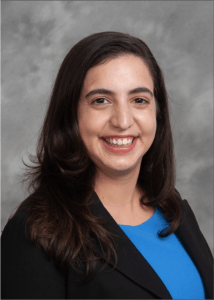
Dr. Elchoufi arrived at Emory with a pre-existing passion for environmental issues, leading her to feel she’d found kindred spirits in her ENVS advisors. However, she had already embarked on the pre-health track, which she found very stressful and intense. A less anxious culture and an interest in environmental topics led Dr. Elchoufi to the ENVS department, where she stayed for the remainder of her undergraduate years.
“During undergrad, I wanted to do something that intersected with public health and environmental health,” she says.
As a freshman, Dr. Elchoufi began working in a lab where she flagged Emory’s surrounding areas for ticks. After they were collected, she would perform molecular analyses to determine the kinds of diseases they carried. Much of Dr. Elchoufi’s work, including her honors thesis, involved mentorship from ENVS professor, Dr. Thomas Gillespie, and focused on the intersection between environmental and human health.
“During my honors thesis on antimicrobial resistance, I found that my topic was directly related to the interface between wildlife and humans. The intersection between environmental health, conservation, and human health felt very intuitive,” she says.
Despite her challenges with the undergraduate pre-health culture, Dr. Elchoufi’s lifelong interest in medicine emerged not long after graduation. After working for a few years in public health, she decided that she wanted to return to medical school on her own terms. Following her completion of medical school at the Emory University School of Medicine and her family medicine residency at Duke University, Dr. Elchoufi became a family physician practicing in Norcross, GA.
Dr. Elchoufi recognizes many overlaps between her background as an ENVS major and a practicing physician—oftentimes at the macro scale.
“The overlap is part of the way I think about things. Right now, I practice in Norcross, but my patients are from all over the world,” she says.
“I have a lot of patients from Central and South America, Central Africa, Southeast Asia, East Asia. A lot of those people are coming from places impacted by disease transmission. People come to the United States for so many reasons like environmental issues or war, and there are so many things that drive human migration.”
On the job, Dr. Elchoufi commonly considers the environmental and human health impacts of built environments: can patients walk and access greenspace safely where they live? What about heat levels and people’s ability to exercise?
“The framework of ecology applies on multiple scales to each person,” she says. From her patients’ individual experiences to the larger forces that form their context, Dr. Elchoufi knows ecological concepts are always at work.
Although Dr. Elchoufi’s route to becoming a physician may be an unusual one, she portrays this freeform journey as essential to her enjoyment of both work and school. She strongly encourages current undergraduate students with similar interests to follow their intuition, even if it doesn’t lead down the well-traveled path.
“Don’t get trapped in prescriptive paths. I felt very pressured in the pre-health track that I had to have a certain grade in bio, a certain grade in chemistry. I’m grateful I didn’t listen to the pressure: that allowed me to enjoy myself as an ENVS major,” she says.
Dr. Elchoufi also urges students to reach out to those whose work interests them and talk to many different people. She found her undergraduate research opportunity through emails and conversations with professors like Dr. John Wegner. These connections led to a grant which allowed Dr. Elchoufi to conduct research abroad in Rwanda as part of a multidisciplinary research team evaluating water and sanitation.
“If I hadn’t just randomly emailed professors to see if I could have a meeting, a lot of this never would’ve happened. If you don’t knock on doors, you don’t know which doors will open,” she says.
In a near-future which promises some degree of new environmental and public health challenges, students who are also interested in environmental and public health should look to Dr. Elchoufi’s path as an example of a way they can make a positive difference for themselves and others.
 Department of Environmental Sciences