Edited by Easton Lane 25C
Sasha Collins 24C
Internship Organization: Zoo Atlanta

Sasha Collins had the opportunity to intern at Zoo Atlanta during summer 2023, working with the zoo’s Primate Keepers to take care of monkeys, lemurs, and sloths. Over the preceding winter, he had started looking for a summer internship when he heard about the Zoo Atlanta opportunity from a family friend.
Having always wanted to work with animals and zoos, Collins interviewed with Zoo Atlanta over Zoom and secured the internship. Assisting the Primate Keepers entailed “diet preparation, cleaning, training the animals, feeding, and preparing enrichment,” he says. Other functions of the internship included his attendance at zoo meetings and conducting his own “observational project” on one species housed in Zoo Atlanta.
Following his lifelong passion for nature and helping animals, Collins’ internship at Zoo Atlanta helped him realize that he wants “to pursue a career where I work with or study animals.” Importantly, the experience also gave Collins more faith in pursuing a career of working with animals, as he saw through various Zoo Atlanta positions that it was very much possible.
As he will also be graduating from Emory this summer, Collins has worked with Green Careers Cluster Advisor Rey Murat to polish his resume and cover letters for post-undergraduate jobs and internships. This Career Center advice also came in handy for Collins’ internship at Zoo Atlanta, which is safe to say was an enriching experience for him.
Julia Marquis 25C
Internship Organization: Office of Sustainability Initiatives
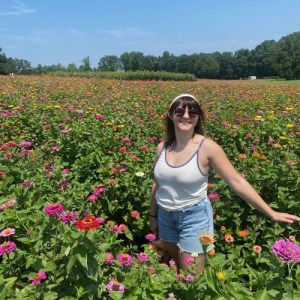
Julia Marquis’s summer internship with the Emory Office of Sustainability Initiatives was a direct continuation of her spring internship, where she was the communications and marketing intern. As OSI has a large presence on campus, Marquis found out about this opportunity through social media and ENVS department newsletters—some of which she would end up working on during her internship.
Going into the internship application process, Marquis knew she wanted to obtain a role that focused on both media and environmental sciences while gaining experience in a professional office. As the OSI communications and marketing intern, she developed “social media campaigns for the office that provided education on specific environmental topics” and “shared office and campus events,” while also curating the weekly OSI newsletter and developed her own projects.
“My biggest takeaways were learning about my own personal time management skills as well as teamwork skills,” Marquis says. “Since the internship was remote, I spent time developing a plan to finish my own work as well as collaborate with others on projects.”
Marquis’s internship represents an environmental field that is gaining more prominence in the age of social media and online connections: environmental communication. The OSI internship helped Marquis “develop passion for environmental communication,” and gain in experience in a field that will only grow as technology and environmental issues receive more coverage.
Ayaka Smart 25C
Internship Organization: University of Minnesota Department of Ecology, Evolution, and Behavior; Cedar Creek Initiative Reserve

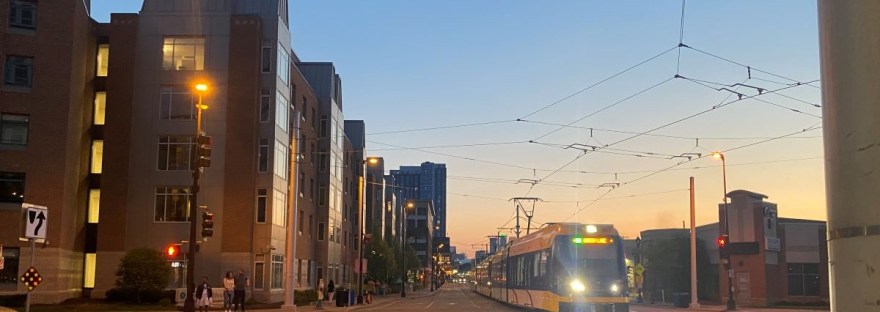
During summer 2023, Ayaka Smart interned at the University of Minnesota’s Department of Ecology, Evolution, and Behavior, aiding in ecological field research at the Cedar Creek Ecosystem Science Reserve. After studying abroad in spring 2022, Smart wanted an internship close to home that still allowed her to get outside, and she found just that in her work at Cedar Creek.
Even though Smart started looking into summer internships in the middle of spring, she wound up applying to the role at the University of Minnesota in early April. To find the internship, Smart notes that she “always looks at the National Science Foundation’s website listing different Research Experiences for Undergraduates (REUs),” which lists programs from across the United States.
After interviewing for and securing the position via an asynchronous video interview, Smart began her work through the University of Minnesota at the Cedar Creek Ecosystem Science Reserve. As an aid for the ecological research occurring on site, Smart performed fieldwork tasks every day, concerning everything from the bison enclosure to “experiments on habitat fragmentation,” as well as collecting necessary data samples.
“I always grew up thinking that the prairie of Minnesota—or anywhere in the Midwest—was slightly uninteresting compared to marine or mountainous ecosystems in other parts of the nation,” Smart says, “but after my summer learning about the power of prairies and their complex ecological functions I gained a new appreciation for the place I grew up.”
Smart’s time at Cedar Creek ended up informing her future career direction, as she ended up connecting with a career panelist who also worked in wildlife conservation. After learning more about the wildlife conservation career path, Smart notes that she “would love to do something like that and possibly participate in fieldwork abroad or with a nonprofit organization!”
Jacqueline Zhang 24C
Internship Organization: Clean Water Action
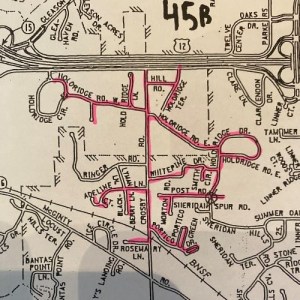
Jacqueline Zhang interned at Clean Water Action, an environmental lobbying non-profit advocating for beneficial environmental acts at the national level. On her way to accepting this internship, Zhang received “great recommendations from the career center,” and ended up finding the internship through a job posting on the Handshake job board.
Zhang’s internship featured a focus on environmental policy—a field within which she did not have a great deal of experience. Despite this, she characterized the internship as a “good learning experience,” adjusting to a position that focused on engaging the public via “door-to-door canvassing to organize and fundraise” with the purpose of achieving Clean Water Action’s legislative goals.
Coming into this internship, Zhang did not have a clear idea of what niche of environmental science she wanted to pursue, and while she still does not have a specific path in mind, she notes that the internship “gave me more possible directions to look into, in a good way.”
Zhang’s biggest takeaways from her Clean Water Action internship were “learning about the inner workings of a lobbying non-profit and figuring out how to get accustomed to a new area,” exemplifying how internships can spark professional as well as personal growth. She also encourages environmental science students to go through the efforts to get involved with an internship, as “it’s a good first step to entering the ‘real world’ and exploring post-undergraduate or postgraduate options.”
The Green Careers Internship Fund aims to support students as they gain work experience that will help them pursue environmentally related careers. The fund provides a stipend to support students who would otherwise be unable to afford to participate in sustainability/environmentally related career development internships. Internships may be in any organization (government, commercial or non-profit), and funds are used to supplement students’ income during a summer or semester. As part of completing the internship, students must enroll in the ENVS summer internship course and complete a minimum of 160 hours of work in the internship. To learn more, contact Leah Thomas (leah.thomas@emory.edu)
 Department of Environmental Sciences